
2026 Is Becoming the Year of Structure in Automotive Financing
Over the past two months, automotive finance has entered a new phase.
AI is everywhere — in CRM systems, desking tools, lead handling, digital retail flows.
Everything feels faster.
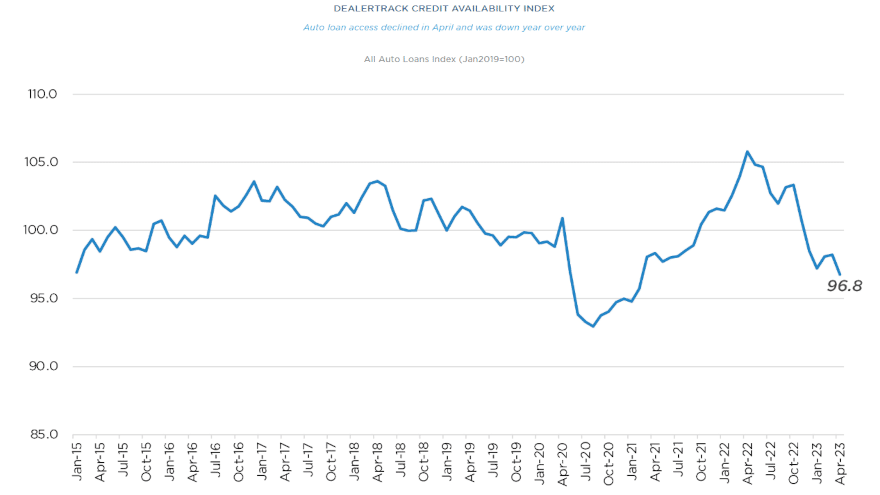
At the same time, lenders are tightening.
PTI and DTI ratios are under sharper review.
Borderline files pass less often.
Documentation requirements are rising.
Subprime appetite is more selective.
The contradiction defines the moment:
More automation in the process.
Less tolerance in underwriting.
And when tolerance drops, structure matters more than speed.

The Structural Blind Spot
Most technology in the market improves:
- Lead capture
- Credit visibility
- Payment simulations
- Workflow efficiency
Very little improves how a deal is structured before submission.
Screening is not structuring.
Matching is not decision infrastructure.
Knowing the score is not the same as knowing how to structure the deal.
In a selective credit environment, precision before submission becomes critical:
- Realistic minimum down payment
- Coherent lender direction
- Vehicle aligned with acceptance behavior
- Consistent structuring logic applied deal by deal
This is where weak processes get exposed.
What Tightening Looks Like Inside the Store
When lender appetite narrows, three things happen quickly.
1️⃣ Rework increases.
Deals require resubmission. Vehicles change. Deposits adjust. Funding slows.
Rework drains time, confidence, and cash flow.
2️⃣ Expertise concentration becomes risky.
If structuring depends on one strong F&I manager, the operation becomes fragile.
Selective markets punish improvisation.
3️⃣ Lender relationships become more sensitive.
Exploratory submissions damage credibility.
Structured submissions strengthen it.
In tighter markets, clarity before submission becomes a competitive advantage.
The Shift Dealers Must Make
The industry talks about automation.
The real shift is decision discipline.
Move from:
“Let’s see if it passes”
to
“Let’s structure it realistically.”
From reacting after a decline
to structuring before submission.
From scenario exploration
to clear financing direction.
This is not about replacing F&I judgment.
It is about supporting it with structured logic.
Technology structures.
Humans decide.
Why AI Alone Won’t Solve This
AI can accelerate communication.
It can summarize data.
It can simulate payments.
But it does not automatically create lender-aligned structure grounded in real dealership transactions.
What selective markets demand is not more automation.
They demand decision infrastructure.
Structured financing logic.
Aligned with lender reality.
Consistent across teams.
Clear at the moment of credit application.
Stability in a Less Forgiving Market
As rates fluctuate and credit tightens, the margin for structural error shrinks.
Speed without structure creates instability.
Structure before submission creates resilience.
The stores that will remain stable are not the ones submitting the most deals.
They are the ones structuring the cleanest ones.
Where Structure Becomes Strategic
In this environment, decision infrastructure moves from optional to strategic.
SAM provides clear financing direction from the moment a credit application is completed.
Lucy is the F&I platform where those financing decisions are structured, justified, and repeated consistently.
The objective is not automation.
The objective is clarity before submission.
F&I managers remain the decision-makers.
But in tighter markets, having structured, lender-aligned direction earlier in the deal is no longer operational comfort.
It is structural stability.
The Takeaway
Automotive financing is entering a disciplined phase.
More AI in the workflow.
Less tolerance in underwriting.
Less room for structural error.
The advantage now belongs to dealerships that structure before they submit.
Clarity before speed.
Alignment before persuasion.
Consistency deal by deal.
That is not a trend.
It is the next operating standard.